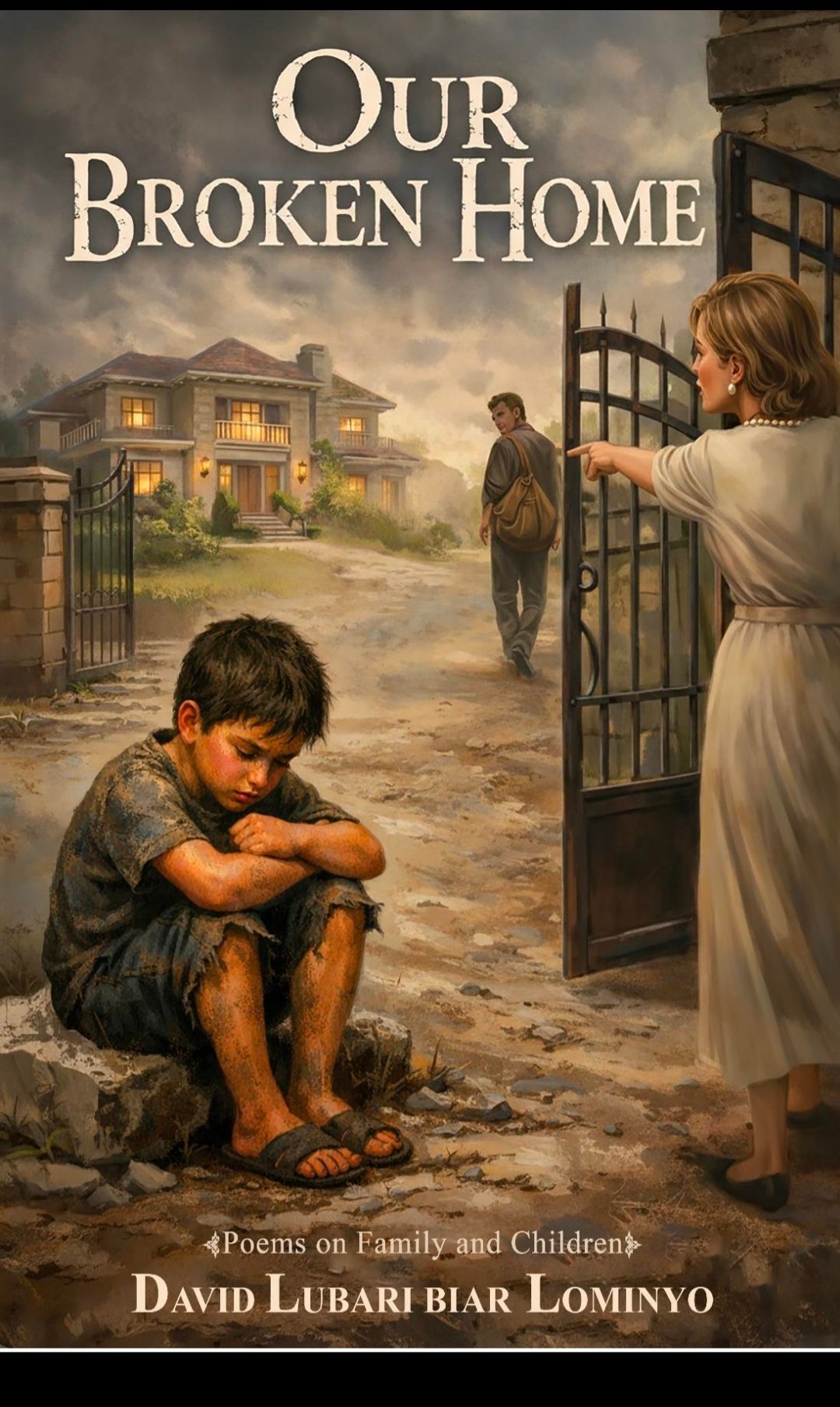
I remember the home where my mother and father lived in harmony — where childhood felt safe, whole, certain. I don't know anymore whether that's a memory, or a wish.
Our Broken Home goes back to that memory, and then asks the question most of us avoid: what happens when it fractures? Through separation. Through divorce. Through the cultural shifts that leave children quietly picking up the pieces no one else notices.
This isn't a book that whispers. It interrogates — the emotional turmoil children carry when a family splits, the tension between empowerment and complementarity, the paradox handed to boys and men: be strong, provide, protect — then be told that strength itself is the problem. It asks who gets to speak for the unborn. It counts the quiet cost of choices made in the name of freedom — loneliness, regret, the years that don't come back.
It's uncomfortable. I won't pretend otherwise. But some of the truths worth hearing were never going to be comfortable.
No gender flourishes when the two are in competition with each other.
What struck me most wasn't the provocation — it was the clarity. David Lubari doesn't write to attack, and he doesn't write to divide. He writes to name what many of us feel and few of us say out loud. Drawing on what he's witnessed across South Sudan, other parts of Africa, and the Middle East, he doesn't argue from a distance — he argues from having watched families come apart up close, and having sat with the children left holding the pieces.
The collection doesn't pick a side to fight. It argues for something almost nobody argues for anymore — complementarity. The idea that husband and wife, man and woman, were built to strengthen each other, not compete with each other, for something bigger than either one alone.
So let me ask you what this book asks. Do you believe family is still worth fighting for, even when it's hard? Are you tired of conversations about gender that only let one side speak? Do you want poetry that makes you think, not just feel? If you're a parent, a leader, or simply someone who's watched the next generation grow up faster and more fractured than the one before — this book was written for you.
It won't tell you what you already believe. That's not its job. Its job is to say, honestly, what too few people are willing to say — and trust you to sit with it.